

“Mary therefore took a pound of expensive ointment made from pure nard, and anointed the feet of Jesus and wiped his feet with her hair. The house was filled with the fragrance of the perfume.” – John 12:3 (ESV)
The Anointing of Jesus by Mary
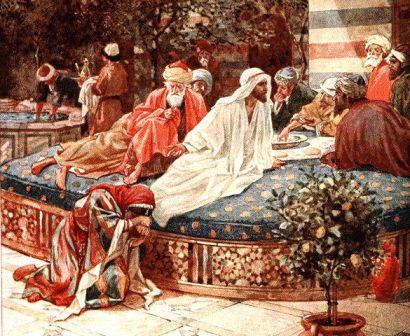
As we remember Holy Week, we encounter pivotal moments that offer profound lessons for believers today. One of the most moving is the anointing of Jesus by Mary, the sister of Martha and Lazarus. In this moment, we witness a stunning act of unrestrained worship as she pours out her life’s savings upon the Lord.
The Setting of Sacrifice
In the parallel account in Mark 14, the setting is the home of Simon the Leper—likely a man Jesus had healed, now gratefully hosting the Lord and His disciples. While Mark describes a woman with an “alabaster flask of ointment of pure nard,” John 12 identifies this woman as Mary.
What This Cost Mary
To truly understand the weight of her actions, we must consider what it meant for Mary:
- A Radical Sacrifice: The ointment was valued at 300 denarii—roughly a year’s wages. To put this in perspective, imagine giving your entire annual salary in a single moment.
- Total Abandonment: She did not hold back a single drop. She broke the flask and poured it all out on Jesus’ feet, keeping nothing for herself.
- A Lingering Influence: The Bible tells us the house was filled with the fragrance. When we truly abandon ourselves in worship, those around us cannot help but notice. Nard has a tenacious, heavy scent. It’s likely the fragrance remained on Jesus and in the house for several days. Jesus may have even taken that aroma with him to the Cross.
- The Scent of Devotion: As Mary wiped His feet with her hair, she carried the scent of her worship with her wherever she went.
Facing the Critics
Mary’s devotion was immediately met with “practical” criticism. The disciples (led by Judas, who had ulterior motives) scolded Mary harshly, saying the ointment was “wasted” and should have been sold to help the poor.
Often, when we give our best to the Lord, we are criticized by those who don’t understand our calling. When I (Mike) joined Cru’s ministry after college, I returned home to seek out a team of people who would invest in my ministry. A high school friend I ran into made it clear he felt I was “wasting” my life and talents.
The Lord’s Vindication
Jesus’ response to both the critics and to Mary, provides us with deep comfort:
- He Validates Her: “Leave her alone… She has done a beautiful thing to me” (Mark 14:6). He saw her heart when others only saw the “waste.”
- He Sets Priorities: He reminds the disciples that while the poor will always need help, His time on earth was short.
- He Rewards Her Effort: “She has done what she could; she has anointed my body beforehand for burial” (Mark 14:8). Because the Sabbath would be the day after the Crucifixion, the women who went to the tomb on Easter Sunday morning were unable to anoint Him—by then, He had already risen! Mary’s act was the only anointing Jesus received. We do not know if Mary understood God’s purpose for her lavish sacrifice.
A Lasting Legacy
Whenever Mary appears in Scripture, she is almost always at the feet of Jesus—worshipping, submitting, and soaking in His wonderful teaching.
Jesus promised that wherever the Gospel is proclaimed, Mary’s story of anointing Jesus would be told. Today, centuries later, we are still moved by her sacrifice.
We often criticize ourselves for not doing more, but hearing the Lord say, “You did what you could,” is our ultimate reward.
As you observe Holy Week and the Resurrection, may you be encouraged to offer your own “alabaster flask” of worship to the Lord.
Thank you for the love you show us through your sacrificial prayers and gifts.

 Mike and Sus Schmitt